
President Obama — SNCC’s Victory

November 5, 2008 by dektol

Victory, after forty six years.
This happened last night. This is for the children.
It is for the grand children.  This is the victory
of the Movement. This is the victory of SNCC.
What were they fighting for? Not just integration.
Not even justice and the right to vote.
They did not use the word Hope. I never heard “hope”
spoken. I did hear the word “Dream”.
“It was like I died and went to Heaven and it was
integrated there.”
Heaven, that is a word I heard.
SNCC was fighting for heaven on earth here in America.
SNCC was fighting for equality in jobs, in income, not only for
Black folk, but for all folks.
Many are dead who  lead this fight. James Forman is  dead.
He led us all. Sam Shirah is dead. He was a white boy from
Alabama, who  they picked out and spit on, always,
He was a “nigger lover.” So was I for that matter.
Nigger lover and proud of it.
And now this, this victory.
It took forty-six years.
I was twenty. That’s how old I was.  Everyone was young.
June Johnson is dead. She was fifteen.
This is for everyone. This is for the children. This is forever.
This is amazing.

November 4, 2008

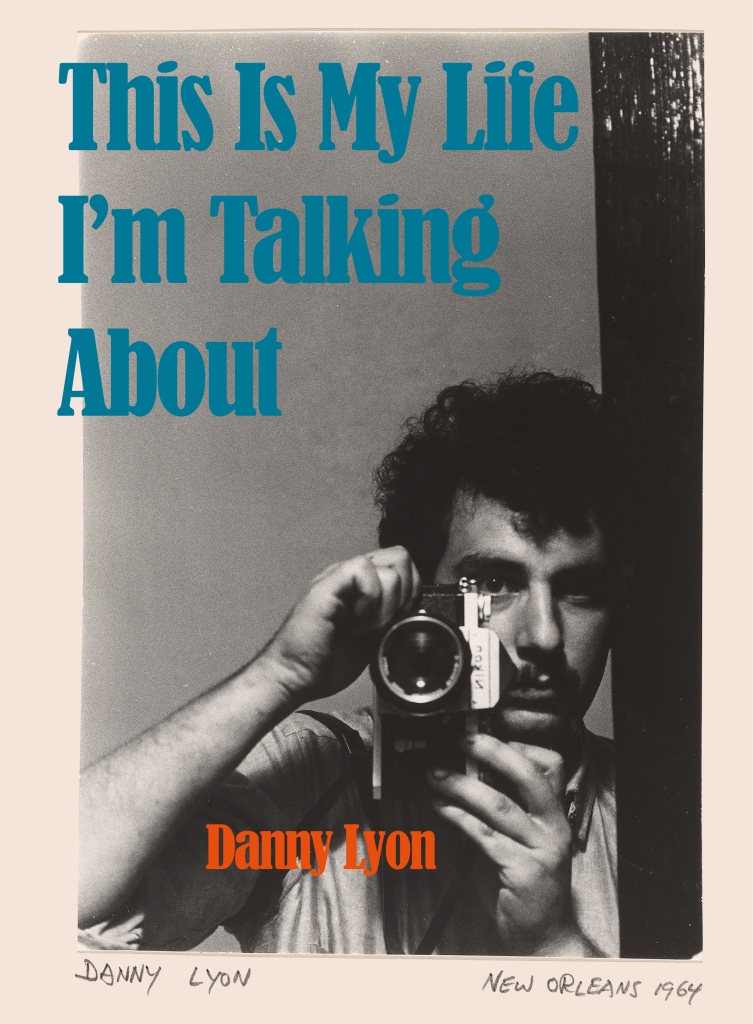
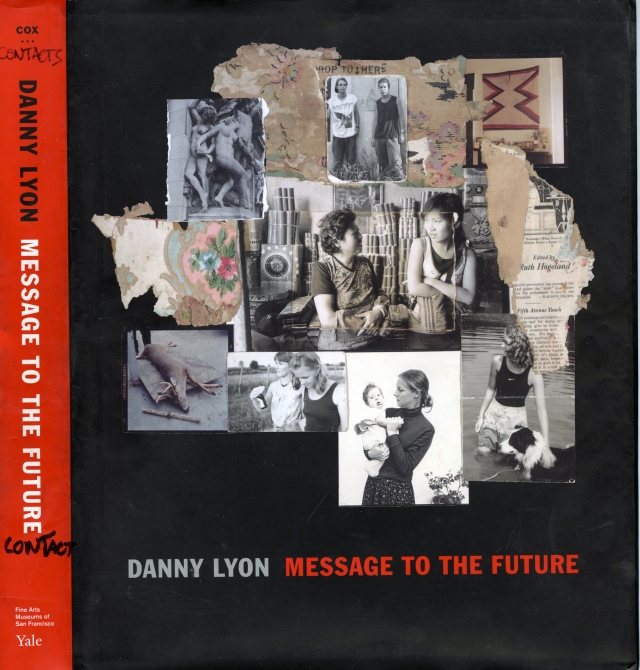
Memories of Myself, Photo Essays by Danny Lyon

March 6, 2009 by dektol

http://www.amazon.com/Danny-Lyon-Memories-Myself/dp/0714848514

Memories of Myself, the Photo Essays of Danny Lyon. This new book from Phaidon, is ready after two years of work. Copies will reach Amerika in April, 2009.
Photojournalism from 1964 through 2002.

From “The Fisherman”, an unpublished excerpt

January 11, 2009 by dektol

He sat in a Virginia jail cell, blood running down his head. Christ his head hurt. Was it the stitches? Or the fact that he had been knocked unconscious by long wooden baton. That morning they had walked the bridge that crossed the Potomac. He and Mark and Rachel, Mark holding the B&W home made flag, walking to the Pentagon. They got there before everyone else did. And he was knocked out by a Marshall who took one good swing at his skull using a long wooden baton, leaving him unconscious and bleeding. He woke up in jail. The air was filled with cigarette smoke. The dormitory, the bunks covered with young men, arrested and waiting, the sun light of morning slanting in through the narrow window. Hippies talking, students talking, poets talking, talking about police, talking about justice, talking about batons and clubs, talking about revolution.

He stood at the Lincoln Memorial remembering. Remembering when Peter Paul and Mary were standing there. He asked to make a picture of Marlon Brando, and the big guy grabbed James Baldwin who was half his size, grabbing him around the shoulders and both gave enormous grins as if they shared a secret, Baldwin showing a big gap in the middle between his front teeth. Bob Dylan the folksinger looked so young, a little lost, holding his guitar case among all those people milling beneath the statue. The great March for Jobs and Freedom which later be known as The March, to distinguish it for the many Marches that followed. This day as the Fisherman stood there, there was no March, just a cold winter day, with half a dozen people standing near the statue, as out on the Mall they prepared to swear Barack Obama in as the Forty Fourth President of the United States of America. It had to be done by Noon, that’s what the Constitution says. At lunch Julian said it was “the greatest event of my lifetime.”

He looked up at Lincoln, an alabaster giant, seated high above them. “In this Temple, as in the hearts of the people, for whom he saved the Union, the memory of Abraham Lincoln is enshrined forever.” It was a temple, the statue like Athena, high above the Greeks, who painted her all sorts of colors and considered her God. And to Lincoln’s left the words of the Second inaugural, one of the finest uses of the English language in all history, written by a self educated lawyer. It is wonderful to read, and it justifies a war that killed 700,000 Americans. Lincoln calls it “strange” that the South would fight for such a cause, he does not judge his enemies, but seems to understand that they too had a reason to go to war. The war, and the horrible suffering of the victims, including those on the battle field who suffered amputations for gun shot wounds, without anesthetics, were an Act of God. So the Union is preserved, and we now have Barack Obama in Lincoln’s place.

The fisherman does not buy this. The Civil war even more insane as all other wars. What Martin Luther King had to say on the steps on the Lincoln Monument, made more sense. He espoused non-violence. The great March was at the height of a non violent Movement, a Movement that was stopped by yet another war, the War in Vietnam.
Just a few hundred feet below the Lincoln Monument is the Monument to the soldiers killed in Vietnam, all 54,000 of them. The March took place in August of 1963. One year later the Movement floods Mississippi with voter registration workers, three of which are murdered that June, as soon as the program begins. In August of that same year, 1964, Congress passes the Bay of Tonkin Resolution, authorizing the sending of combat troops to Vietnam. By then, hundreds of American “advisors” had already died. In the Spring of 1965 Johnson begins sending thousands of combat troops to Vietnam, and the dieing and killing escalates. That act of war, another “worthy” war, perhaps another war that God wanted, certainly another “just” war, is what ended the American Civil Rights Movement. Students and young people and Amerika turned their attention else where. Their lives were on the line. And some of them, many of them, lost them. Others ran to Canada. And a few, like the Fisherman, went to jail, or got knocked out, or marched. Vietnam had no Lincoln in the White House. The poets were in the streets.
“Hay Hay LBJ! How Many Kids did you Kill Today!”
Will Barack do better than Lincoln? He is going to have to. The stakes are higher. The ship of state is greater and more powerful, and moves by its own force, steadily, through the night.

From “The Fisherman”, work in progress

Grace Under Fire Part One — Zoriah at War

August 6, 2008 by dektol

Zoriah war photographer

Zoriah Miller, age 32, has done what few Americans ever do. He has put his principles before his future ability to earn a living. He was “dis-embedded” with the Marines in Iraq because he first refused to give up the pictures he made of dead US Marines, and then refused to remove them from his remarkable blog. http://www.zoriah.net/

What a brave man. I am sure this ban is permanent and this war photographer will never again get to work closely with our armed forces. Censorship and control have always been part of our militarism. It was very hard, to cover the US in WW2 without submitting to censorship, but brave journalists often found a way to the front without approval. Even so publishers than censored their work. Self censorship, conducted by all the media has created more harm to our democracy than any foreign power ever has.

His two most damned pictures, both in B&W are as stressful to see as Gardner’s dead at Gettysburg and Fredericksburg. The way governments continue to create generations that support war is partly by keeping images like those now released by Zoriah away from us.

This is a very brave man, and a very good writer, and not because he can function under such horrific conditions. But because he has the courage of his convictions, something succsessful Americans in most fields seldom exhibit . From Zoriah’s blog:
“There are dying people strewn around like limp dolls along with lifeless bodies of all ages. People are screaming and crying running as if they have something important they have to do, only they can’t figure out what that important thing could possibly be. The air smells of burnt flesh and sweat is pouring off of my body. My lungs are still on fire from the run and I have to concentrate to see through the sweat coating my ballistic goggles and dust on my camera’s viewfinder. “

( READ THE ATHENIANS ON THE BEACH IN SYRACUSE)
THUCYDIDES

“Freedom is what I’m doin’ right now. ”

June 30, 2008 by dektol

““Freedom is what I’m doin’ right now. Sittin’ down and talkin’ to you,” says Jesse Ruiz, one subject of MURDERERS, a man who had just spent eight and a half years in penitentiary for beating another man to death in Alphabet City with a Louisville Slugger. “Outside prison; this is freedom.” Freedom has perhaps never been so succinctly, convincingly, defined.” From David Velasco’s remarkable Artforum review of Lyon’s films at the Anthology Film Archive http://artforum.com/film/id=20599

Time will Tell, Part Two

June 14, 2008 by dektol

Atlanta is an historic town. Sherman burned it  before he began his march to the sea. Gardner photographed the ruins, still smoking. In New York the General’s  gilded statue sits astride his gilded horse on 58th street at Central Park. Today, as you enter the city at the Atlanta airport, there  are large photographs on display of Doctor King,  whose church was in the city. Now his tomb is there, a National Park.  Even  at the Airport, Pascal’s (two sides, and meat; baked chicken,  candied yams, collards and corn bread, $7.99) there  is a display of B&W prints. We see Julian Bond sitting at the original Pascal’s, his hair large enough for birds to nest in, Julian, working for SNCC, already a young hero of the Movement.
I also worked  for SNCC  reaching the city for the first time in the summer of 1962  before taking a bus further south to Albany, where, after a few days of making pictures, I was put in jail. Now those pictures, made 45 years ago, and others I made in the city of Atlanta as SNCC kids and marchers brought what would be called the  Southern Civil Rights Movement  into the heart of downtown, are on display along with a few hundred others  as part of Road to Freedom, 1956-1968. The High Museum sits in the center of the new Atlanta.   The“downtown”  I knew and that was the target of many SNCC demonstrations is gone  as new construction  and  the cutting of trees  has done a much more thorough work of destruction than Sherman ever could have.
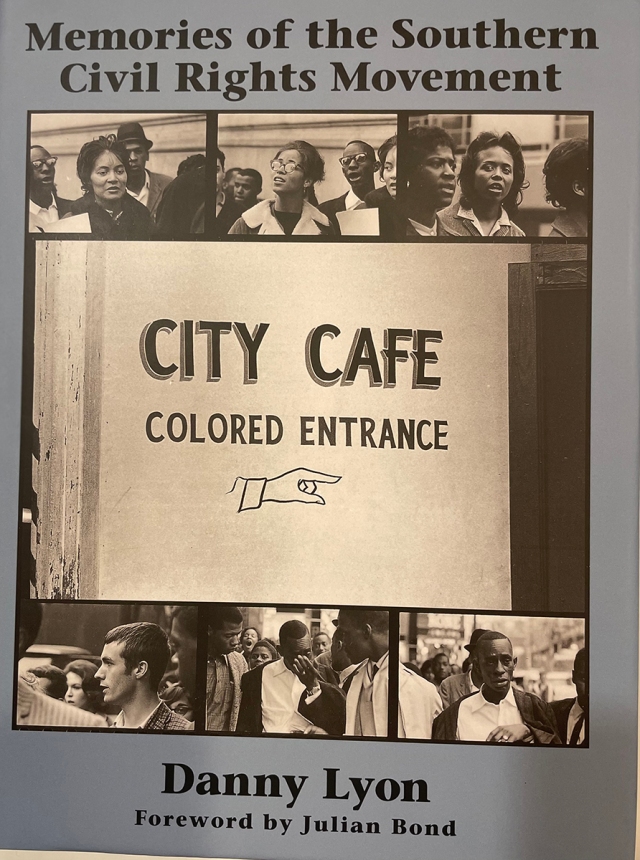
In June of 1963 I moved to Atlanta and shared an apartment with John Lewis  and a white  radical from Alabama,  named Sam Shirah.  Sam was murdered in the mid 1970’s.   While sitting next to now Congressman Lewis at the reception for Road to Freedom at the High, the Director announced that the High now probably owned the largest archive of civil rights photographs anywhere,  and I turned to John and  whispered  “except  for mine”.   When a former SNCC worker was presented as one of the photographers, John said,“I didn’t know she  took pictures.”  The Southern Civil Rights Movement,    was not discovered by the national media until  it had been in existence for two years. This was  precisely the time that Seymour Hersch said it would take the media to discover “any revolution” in America.   By a combination of a spirit of adventure and luck (my motorcycle broke down in Chicago leaving me profoundly bored), I managed to reach  the Movement, cameras in hand, one year ahead of most everyone else. By June of 1963 I was hired as the SNCC’s first and only staff photographer and at that point I was sent to every demonstration they knew of in advance to make pictures, mostly of people being arrested.  Once the media  and a thousand whites arrived  for the  Freedom the Summer of 1964, I left and didn’t look  back for another generation.  By then it was  history.
Julian  Cox, curator of Road to Freedom, has chosen the dates 1956—1968 for his show, Photographs of the Civil Rights Movement.  I would argue that the Southern Civil Rights Movement, which was an authentic  and mostly successful grassroots movement, that  was called the Movement  (the capitilized word first used when I named the collection of pictures that SNCC would publish in 1964) in the book of that name, ended much earlier. Cox’s show ends with the murder of Doctor King  and includes pictures of the martyred  American hero in his coffin, a picture I found shocking.  A Navajo on  the board of trustees would never have  allowed this picture to be displayed. I first saw a dead person when at age twenty-one I   stood in line to view the open  casket of one of the young girls blown up in   the 16th Street Baptist Church bombing. I  was supposed to make a picture of her  but when I reached  the open coffin, I could not bare to look. I put the Nikon Reflex over my eye, pushed the shutter and left.
Over the twelve year period,   (the greatest number of demonstrations and arrests were all in the spring and summer of 1963, over 15,000), all kinds of photographers touched base with the Movement.  Life and  Look Magazine assignments, free lancers, amateurs (Julian Bond    often had a camera around his neck ), “art” photographers, were occasionally all at the same place at the same time.  There were hundreds of photographers, and thousands with cameras at the March on Washington in August.  But there were a few, two weeks later when the KKK blew up the girls in Birmingham, and there were none when they beat the children bloody at Danville, Virginia the night before  I reached  the hospital the previous June. So, we ask in Time will Tell, Part Two, which  of all these photographs survived? What exactly did the High Art Museum decide was worthy to show, some to publish and all to preserve “for all time” in their humidity  controlled vaults  for the future, of  the photographs made of perhaps the one period of twentieth century America that almost everyone feels good about, the non-violent Southern Civil Rights Movement?
The show, which is more extensive  and quite different than the book,  is a knock out. In addition to the expected B&W silver prints, mostly 11 by 14 inches and smaller, that cover the walls, there are also posters  and glass cases with police arrest documents, civil rights  reports, flyers from SNCC and CORE, and often the  original vintage prints that were used for these.  From one photograph made by me at the March on Washington of a young man,    we see the silver print of the photograph, the “NOW” poster SNCC  made using the picture, and finally a picture by Bob Fletcher showing the torn poster hung on the porch of a freedom house in Mississippi.
The most compelling prints were made by reporters that developed their  film and prints in motel rooms and then typed a text on the spot, taped it across the bottom of the 8 by 10 print, and using a drum scanner,   telexed this work over the phone lines to their newspapers where silver prints were made. Cox correctly purchased many of these for the collection, and the combination of picture,  say, of John Lewis, with a text right on top of the picture  describing how his teeth were knocked out  and why there is blood all over his shirt, is as affective as we can get using photographs.  If this was put into a rocket ship and sent into space, the future life forms could probably figure out the history of the movement  from  this one single work.
Another part of the exhibit includes a wall covered with the 400 mug shots made of the second wave of Freedom Riders as they were incarcerated  in Jackson, Mississippi.  I believe many of those arrested were taken to Parchmen Penitentiary, then and now a notorious place to be. These mug shots very powerfully preserve as sense of a reality now gone  and truly deserve to be shown and preserved.

The day the media finally discovers the Movement that had been going on for two years, is May 3, 1963  when the Birmingham police turn  water hoses on the youthful demonstrators in the park across from the 16th Street Baptist Church ,which will be bombed three months later.  Three well known professionals are there: the free lance magazine photographer Bob Adelman (who had connections to CORE),  Charles Moore, who had a telephoto lens, and Magnum’s Bruce Davidson, who  does not. They are in the middle of the most photo genetic moment of the Movement;  they couldn’t have a better place to make images that would appeal to magazines and bring  Americans into a massive support group for the Movement. This is exactly what happened when the world saw Adelman’s and   Moore’s pictures, of the sheets of water “so forceful it could  peel the bark off a tree”, hitting young people. Bill Hudson got a close up shot of a cop pulling a young man into the open mouth of a lunging German Shepard who is about to bite him in the stomach. Davidson, using a short lens, makes the most realistic and least effective pictures. They have little propaganda value as the some of the kids seem to be enjoying themselves, which I am sure they were.

The Movement pictures which were  most effective were a type of propaganda. These “kids” where in a holy war to bring down the evil of segregation.  Adelman’s picture of a cluster of demonstrators, two with arms aloft as they are hit by the water, is straight  of out an image from the French Revolution by David and is one of a number of masterpieces of American photography in the  show. Inexplicably this great art museum has allowed the picture to be cut in half when they reproduced it to  make a very handsome cover for the show’s catalogue.

After the Selma March, a well covered media event  I skipped, the Movement  and the pictures wind down.  The best pictures here are of a completely beat Fannie Lou Hammer at her home by Steve Shapiro, a feisty little guy from Chicago who covered  the Movement.  John Lewis being beaten to the ground yet again at the first Selma march , which was stopped with police violence, a  shot of police hysteria during the Watts Riot (not actually part of any civil rights movement)  and a great series by Morton Broffman (Morton who?) made during marches in Montgomery. Broffman, whom I never heard of, is one of the  many real discoveries and revelations made by Julian  Cox. He has also produced a fascinating and the first really serious essay on this subject in the book Road to Freedom.  Cox has put a few years of hard work into assembling this material, all of which has withstood  The Test of Time.

Time will Tell, Part One

June 8, 2008 by dektol

“There is a new world being formed, we just don’t know what it is yet.”
Vaclav Havel published this idea quite a few years  ago.
Can we see it now? Is it here? Do blogs replace literature? Would a young Faulkner write a zine? Will there and should there ever be another Faulkner like presence in midst, in our minds, in our hearts and consciousness?
When, years ago, the painter Guy Russell, tried to explain to me what a web site was,   I kept asking “is it permanent?”
What I actually  meant was  can you keep it?  Like a book? Will all the work and time spent on creating something in a website, pictures or words or layouts,  survive?  Is it permanent?
The “test of time” has been like a great sieve for past works. Those works of literature and art worth surviving tend to survive – and in many, but not all cases, we still enjoy them.
So, in this new world  that we are probably now in, and I think, that we helped to create, “is it permanent?” Will some zines survive because they are better than
all the others?  Will some blogs? Some websites?
Will the great works survive the infinite miles of crap flying around in cyber space?
Are the new world that is emerging, and the concept of greatness, compatible?
As I write this I am listening to one of Beethoven’s Late Quartets. Is there a website, or a blog out there that millions will want to see or read in another two centuries?
Time will Tell.

Where goes the Empire now?

May 19, 2008 by dektol

Its interesting to speculate about what the Empire will look like under President Obama. Last year talking with a friend, a former Attorney General of the State of New Mexico, we described Amerika as a great ocean liner, going through the ocean. “And its going over the edge of the earth, right?” I said as I ate my burrito. My friend said that a new regime could steer the liner a little to the left, or a little bit to the right, but that the liner would keep moving forward.

Will it? President Obama will not dismantle the Empire. I doubt he could , even if as President, he wanted to. But he will preside over an America that is no longer, first among Nations. England and France both lost Empires and remained real world powers, without being able to use the power of armies, which they no longer had.

How about a future of American culture? This is a legitimate and non-violent field in which Americans, if they wish and if they deserve to, can lead the world. It is a world in which minds replace missiles, filmmakers replace generals, quilts replace smart bombs, surfer boarding replaces water boarding.

Not a bad future at all.

Jean-Jacques Rousseau on the Land of the Free

May 18, 2008 by dektol

In the May 29th, New York Review of Books, there is a long piece based on a book by Anthony Lewis “Americans are freer to think what we will and say what we think than another other people.” Perhaps, but as Rousseau would know, we are not free. (I am reading Jean-Jacques Rousseau – Restless Genius, by Leo Damrosch (Mariner Books 2007)

How do we explain our recent history when virtually the entire “media” embraced the obvious lie, that our enemy had weapons of mass destruction? This was a very transparent reason to go to war, which, since the Romans, all law minded nations demand, and even a simpleton that paid any attention at the time could figure out. So how do you explain that the clearly intelligent, educated people that are the writers and reporters, all go for this? And that is followed by the support in the Senate, including most of the liberal Democrats, by the shameful vote for war, yet another low mark in our history.

Is this the Tyranny of the Majority that we have all studied but not always understood? It was fear that seized all these smart well meaning people; fear of each other. Almost none of them, expect poor old shaking Senator Byrd of West Virginia dared to stand up to the apparently torrential social pressure of their peers. The reporters were the worst. Because their jobs were not involved in any popularity contest, they are paid.

So the great free society proved itself neither Free nor Great. Yet we never tire of pointing out the flaws in how the Chinese govern themselves.
“Even while government and laws give security and well-being to assemblages of men, the sciences, letters, and arts, which are less despotic but perhaps more powerful, spread garlands of flowers over the iron chains that bind them, stifle in them the sense of that original liberty for which they seemed to have been born, make them love their enslavement, and transform them into what are called civilized peoples.” Jean-Jacques Rousseau 1750.

Its good to be alive in Obama time

May 18, 2008 by dektol

This is a wonderful moment to be alive in Amerika. I say this after sixty years or so of watching elections. I recall going to sleep in 1948 after repeating ad nauseum “Doodie on Dewey”, only see my youthful dreams (I was six) come true! Harry Truman was elected President. It was only later in my adult form that I learned that he had no trouble sleeping after ordering the dropping of Little Boy on Hiroshima, obliterating mostly women and children and the elderly. I think he said something like “It was just another weapon in the arsenal.”

Now, many Presidents later, here comes Barack Obama. I met him in a bar in Carbondale when he was running for the nomination for the Senate seat he now holds. He leaned down to politely listen to me. Lincolnesk in Lincoln country. Last year I sent him my civil rights book with the inscription “The hopes and Dreams of tens of thousands rests with you”. I wanted to write “millions” but it seemed to presume too much about other people’s feelings.

Simply put, much of Obama is straight from the civil rights movement I witnessed in the deep south in 1962 and 1963. He is the leader that doesn’t lead (thats Bob Moses). He correctly says “Im not that important”. (Thats from James Forman, SNCC executive secretary.) He truly seems to say that he expects Americans to lead themselves, which they do anyway, and do things themselves, which is the only way change occurs.

Its good to be alive in Obama time.